


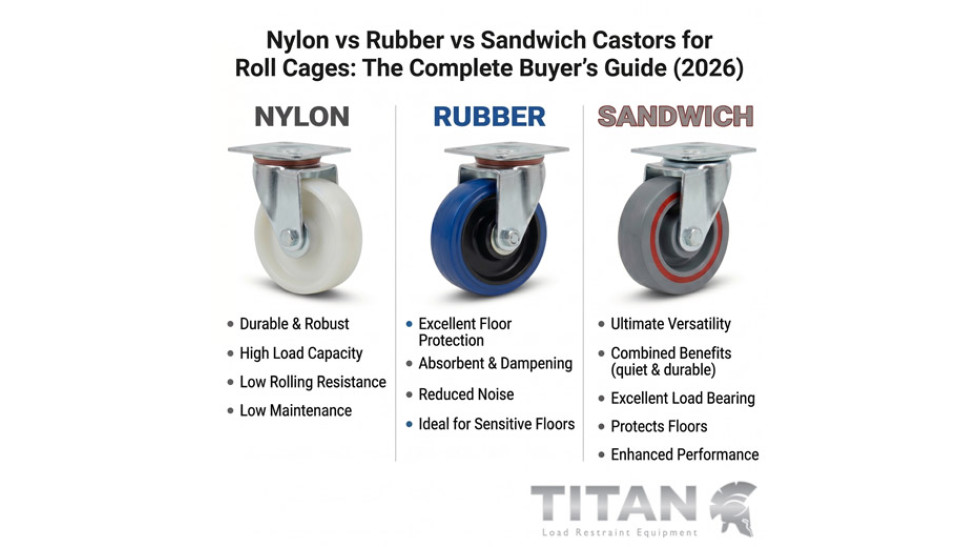
Choosing the right castors for your roll containers(roll cages) is one of the most important decisions for efficient
warehouse and logistics operations. The wrong wheels can lead to increased
noise, damaged floors, operator fatigue, and higher long-term costs.
In this comprehensive guide, we compare:
- • Nylon castors
- • Rubber castors
• Sandwich (composite) castors
We’ll break down performance, durability, use cases, industries, and cost-effectiveness, helping you make the best decision for your operation.
What Are Roll Cage Castors?
Roll cage castors are heavy-duty wheels fitted to roll
containers used to transport goods in warehouses, retail environments, and
logistics operations.
They are designed to handle:
- Frequent
movement
- Heavy
loads
- Mixed
floor conditions
- Continuous
daily use
Because roll cages are constantly in motion, the type of
castor used directly impacts:
- Productivity
- Safety
- Maintenance
costs
Understanding the 3 Main Types
of Castors
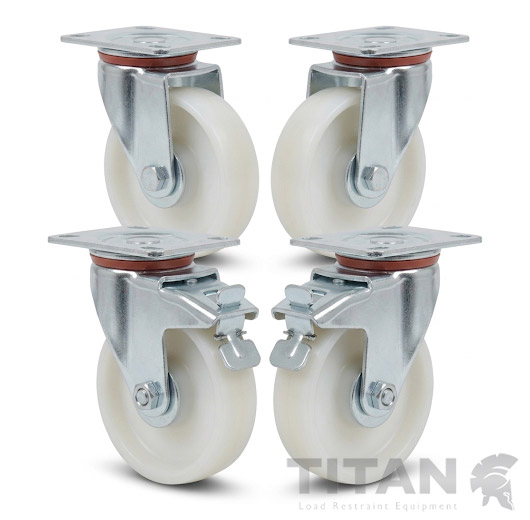
1. Nylon Castors (Hard Wheels)
Overview
Nylon castors are made from solid polyamide, a
rigid and highly durable material commonly used in industrial environments.
Key Benefits
- Extremely high
load capacity
- Very wear-resistant
- Resistant
to chemicals, oils, and moisture
- Low
rolling resistance on smooth surfaces
Drawbacks
- Very noisy
in operation
- No
shock absorption
- Can damage
floors
- Poor
performance on uneven surfaces
Best Applications
- Heavy-duty
industrial environments
- Smooth
concrete warehouse floors
- Static
or short-distance transport
Typical Industries
- Manufacturing
- Automotive
- Engineering
- Heavy
industrial logistics
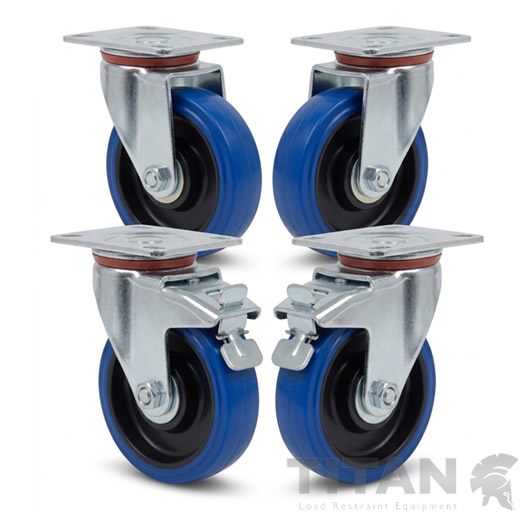
2. Rubber Castors (SoftWheels)
Overview
Rubber castors feature a soft rubber tyre bonded to
a rigid core, offering a smooth and cushioned ride.
Key Benefits
- Very
quiet operation
- Excellent shock
absorption
- Floor
protection (non-marking options)
- Easier
handling on uneven surfaces
Drawbacks
- Wears
faster under continuous heavy use
- Higher
rolling resistance than nylon
- Can
degrade with oil and chemicals
Best Applications
- Noise-sensitive
environments
- Mixed
flooring (tiles, concrete, ramps)
- Long-distance
movement
Typical Industries
- Retail
- Supermarkets
- Hospitals
- Hospitality
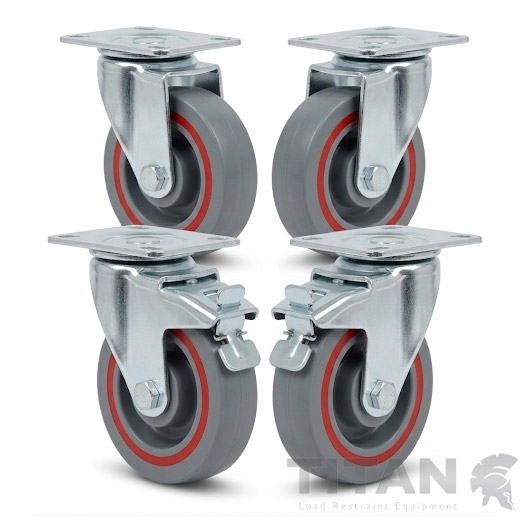
3. Sandwich Castors(Composite Wheels)
Overview
Sandwich castors are specifically designed for roll
cages and logistics operations, combining layers of materials (typically
rubber + polypropylene or nylon).
Key Benefits
- Balanced
performance (durability + noise reduction)
- More wear-resistant
than rubber
- Quieter
than nylon
- Designed
for continuous daily use
Drawbacks
- Not
as quiet as rubber
- Less
shock absorption than rubber
- Slightly
less durable than nylon in extreme conditions
Best Applications
- Roll
cages in constant use
- Distribution
centres
- High-frequency
logistics operations
Typical Industries
- Retail
distribution
- E-commerce
fulfilment
- Third-party
logistics (3PL)
- Parcel
and courier services
Nylon vs Rubber vs
Sandwich Castors (Full Comparison)
|
Feature |
Nylon Castors |
Rubber Castors |
Sandwich Castors |
|
Noise Level |
Loud |
Very Quiet |
Moderate |
|
Floor Protection |
Poor |
Excellent |
Good |
|
Load Capacity |
Very High |
Medium–High |
Medium–High |
|
Durability |
Excellent |
Moderate |
High |
|
Shock Absorption |
None |
Excellent |
Moderate |
|
Rolling Resistance |
Very Low |
Medium |
Low |
|
Maintenance |
Low |
Medium |
Low |
|
Best Surface |
Smooth concrete |
Mixed floors |
Industrial floors |
|
Ideal Use Case |
Heavy loads |
Quiet environments |
Roll cages/logistics |
Choosing the Right
Castor by Industry
Retail &
Supermarkets
Retail environments require:
- Low
noise
- Smooth
movement
- Floor
protection
Best choice:
Sandwich or Rubber Castors
Sandwich castors are often preferred for stockrooms and
deliveries, while rubber is ideal for shop floors.
Warehousing &
Distribution
Warehouses need:
- Durability
- Continuous
movement capability
- Load
handling
Best choice:
Sandwich Castors
They are purpose-built for roll cages and offer the best
balance between performance and longevity.
Logistics &
E-commerce Fulfilment
Fast-paced operations require:
- Reliability
- Low
maintenance
- High
cycle usage
Best choice:
Sandwich Castors
They outperform rubber in lifespan and are quieter than
nylon.
Manufacturing &
Heavy Industry
Heavy environments require:
- Maximum
strength
- Resistance
to harsh conditions
Best choice:
Nylon Castors
Ideal for static-heavy loads and minimal transport
distances.
Healthcare &
Hospitality
Sensitive environments require:
- Quiet
movement
- Floor
protection
- Smooth
handling
Best choice:
Rubber Castors
Key Buying Factors to
Consider
1. Load Capacity
Always check:
- Weight
per roll cage
- Number
of castors per unit
Divide total load by
number of wheels to find required capacity.
2. Floor Type
- Smooth
concrete → Nylon or Sandwich
- Tiles/resin
→ Rubber
- Mixed
surfaces → Rubber or Sandwich
3. Noise Sensitivity
- High
(retail, hospitals) → Rubber
- Medium
(warehouse) → Sandwich
- Low
(industrial) → Nylon
4. Frequency of Use
- Occasional
→ Rubber
- Daily
heavy use → Sandwich
- Extreme
industrial → Nylon
5. Total Cost of Ownership
Cheaper upfront doesn’t mean cheaper long-term.
- Nylon
→ longest life but limited use case
- Rubber
→ lower cost but higher replacement rate
- Sandwich
→ best balance of cost + lifespan
Cost vs Performance Analysis
|
Castor Type |
Initial Cost |
Lifespan |
Best Value |
|
Nylon |
Low (Fitted as Standard) |
Very Long |
Heavy industry |
|
Rubber |
Medium |
Medium |
Light/medium use |
|
Sandwich |
Medium |
Long |
**Best overall** |
Why Sandwich Castors
Dominate Roll Cage Applications
Sandwich castors have become the industry standard
for roll containers because they solve the biggest operational
challenges:
- Reduce
noise compared to nylon
- Last
longer than rubber
- Handle
daily warehouse abuse
- Provide
smooth handling
They are specifically engineered for:
- High-frequency
movement
- Logistics
efficiency
- Reduced
downtime
Quick Decision Guide
Choose Nylon Castors if:
✔ You need maximum
durability
✔ Loads are very
heavy
✔ Floors are smooth
concrete
✔ Noise is not a concern
Choose Rubber Castors if:
✔ You need quiet
operation
✔ You want to protect
flooring
✔ Loads are moderate
✔ You operate in retail
or healthcare
Choose Sandwich Castors if:
✔ You use roll cages
daily
✔ You want long
lifespan + decent noise control
✔ You operate in warehousing
or logistics
Final Verdict: Which Castor
Should You Buy?
For most businesses using roll containers: Sandwich castors are the best overall choice
They provide:
- The
best balance of durability, noise reduction, and performance
- Lower
long-term replacement costs
- Reliable
performance in real-world logistics environments